Resilience: How you can grow through stress
Strengthening resilience means cultivating our ability to deal with stress, crises, uncertainty, and inner tensions in such a way that we can grow from them—instead of burning out. In this article, you will learn what resilience is all about and how you can build it up in your everyday life.
This is very relevant in the current climate, because in uncertain times, the desire for inner strength grows. A term that is currently being heard and read more and more often is “resilience.” What often gets lost in the many tips and training offers is that resilience is not a “life hack” or a self-optimization project to become unshakable or “bulletproof” against the vicissitudes and uncertainties of life. It’s not about becoming tougher. It’s about being flexible and adaptable.
Resilience – a meta-competence that can be learned
Resilience is a set of skills and attitudes. The basic ability to deal with challenges or even grow from them in the long term is innate. Some people have good genes and a fairly happy childhood – in many ways, life is easier for them.
But even people who are naturally more vulnerable to stress – for example, due to neurodiversity, high sensitivity, or even trauma – can strengthen their resilience.
A growing body of research on resilience confirms that we can learn to become more resilient, regardless of our starting point or current situation. Anything that helps us feel alive and promotes connection with ourselves and others is helpful on this journey.
Resilience is not a state, but a lifelong learning process!
Resilience as a “meta-competence” is also highly relevant in a professional context, in a time characterized by great uncertainty and upheaval. Individuals and organizations can specifically promote and “train” their resilience. An important first step is to eliminate influences that weaken resilience. However, there are also limits to resilience training that are important to know, for example, if someone is already in a mental crisis such as burnout.
Resilience: a “trend term” – addressing an age-old longing
It is nothing new that people are looking for ways to better cope with life’s challenges. Our species is characterized by the search for meaning on the one hand and the longing to overcome suffering, stress, and trauma on the other. Over the course of millennia, different cultures have developed different ideas and ways of doing this. Buddhist psychology, heroic narratives in myths and legends, philosophy, religion and spirituality, and science – all of these are ultimately expressions of this search.
Recently, however, there has been a lot of talk about resilience—which certainly has to do with the fact that many people are unsettled by the great upheavals of our time. We live in a time of “stacked crises”—environmental crisis, democratic crisis, economic crisis, digitalization, AI, globalization, etc. In this VUCA world (VUCA: volatile, uncertain, complex & ambiguous), the relevance of things that strengthen our mental resilience naturally grows.
Studies on the topic of “strengthening resilience”
Since resilience is a well-structured meta-concept with clearly defined individual factors, it can also be researched scientifically. Resilience research is still relatively young, having begun in the 1950s. Similar to research on mindfulness, there has been a growing number of interesting studies in recent years that have attracted public interest because they demonstrate the relevance of resilience for the world of work and thus for the economy. 1
Current statistics on the number of sick days due to mental illness 2 are the counterpart to these studies on resilience. They make it measurable and tangible how important and valuable it is, both individually and collectively, to make people and organizations more “resilient.”
Incidentally, I wouldn’t wish burnout on anyone, because I’ve experienced it myself and know how painful, protracted, and expensive it is for everyone involved.
Strong resilience: genes, a happy childhood, or successful training?
Childhood years – fateful years?
Our early attachment experiences have a decisive influence on how we deal with stress later in life. Security, closeness, and the promotion of autonomy lay the foundation. But we all also have an innate resilience.
Each of us encounters stressful situations in the course of our lives, sometimes even tragedies. Sometimes this results in trauma, but often it does not. And even trauma can heal—research now shows that there is such a thing as post-traumatic growth3. In other words, we often grow from it internally, at least in the long term.
And many people are more resilient than we think. There is a recent study on resilience after the pandemic by the Leibniz Institute for Resilience Research (LIR) in Mainz.4 In short: we are a tough and highly adaptive species. At the same time, however, resilience is not just about “surviving,” “coping,” or even “becoming tougher”—on the contrary, it is about vitality and flexibility.
“Rupture & Repair” instead of an idealized childhood
However, most people do not have a perfect childhood and a perfect family. Almost everywhere there are ruptures, unresolved conflicts, secrets, “black sheep,” and various crises. I don’t know anyone for whom everything was always good. An important concept to mention here is that of “rupture and repair.” . 5 It states that difficult experiences in relationships lead to new strength and deeper connection when they are consciously addressed and worked through together. What is obviously not helpful, however, is an environment that drives the young person’s developing relationship, cognitive, and nervous systems into dysfunctional states of emergency. Especially when this happens often or over a long period of time.
But interestingly, sometimes even people who had a less than ideal childhood develop a very special resilience. Often, all it took was one person in their environment who they found helpful! A book I highly recommend here is “What’s Your Pain?: Conversations About Trauma, Emotional Injury, and Healing” by Oprah Winfrey and Dr. Bruce Perry. 6
Difficult situations and experiences in childhood do not prevent resilience. On the contrary, they are often a breeding ground for it—even if this only becomes apparent later and often requires a lot of inner work. Resilience should therefore be viewed as a “long game.”
Neurodiversity, high sensitivity, and individual starting conditions
There are basic neural, hormonal, and constitutional patterns that genetically predispose us to find it easier or more difficult to mature these factors.
An example: Introversion is considered a personality trait that is strongly influenced by genetics. This predisposition can make it difficult to develop the ability to socialize. But it doesn’t have to.
Or high sensitivity or neurodiversity: Associated patterns of information processing in the brain make people more susceptible to sensory overload, which in turn can make it more challenging to develop self-efficacy and acceptance. Conversely, the same trait can also be an advantage when it comes to solution orientation and personal responsibility! Because people who have these traits and are sensitive to their environment must practice conscious, healthy self-boundaries and inner resource management early on.
Transgenerational trauma
Another exciting perspective is to turn the question around and see whether factors that hinder resilience are hereditary. There is currently a lot of research on the topic of transgenerational trauma. 7 And the study results suggest that our nervous and hormonal systems, which control our unconscious response to stress, can be strongly influenced by previous generations.
In principle, however, I find the perspective that resilience can be learned and “trained” regardless of genetic or other initial circumstances to be more optimistic, self-effective, solution- and future-oriented—and thus inherently resilience-promoting!
Resilience: A meta-model
The classic resilience model identifies seven factors:
- Community
- Optimism
- Self-efficacy
- Acceptance
- Personal responsibility
- Solution orientation
- Future orientation
If we look at the list of classic resilience factors, it is easy to see that many of them are quite abstract, culturally mature, and “meta-level.”
It is obvious that these are not innate abilities per se, but rather attitudes that develop or are cultivated over the course of a lifetime—or are hindered! (more on this below!)
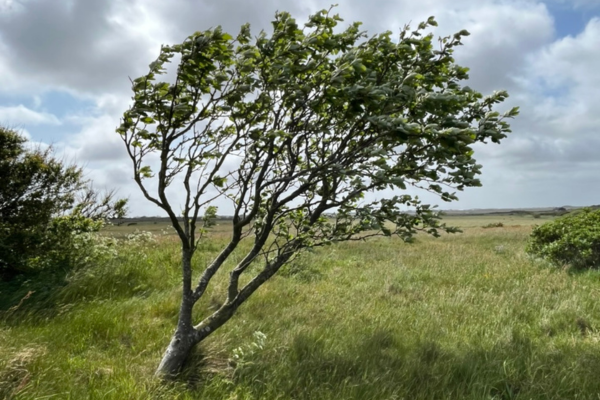
Incidentally, I don’t find the image of the pillars of resilience to be ideal from a purely neurological point of view: a temple roof can only hold if all the pillars are the same height and strength. But that’s not the case with resilience factors. Personally, I prefer the image of a large tree with different roots and branches. What supports, supports. The more that supports, the better. But each of us has a foundation that has brought us to where we are. Even if it may not be great yet, it is a starting point that can be built on.
Seven pillars – two essences
The pillar model of resilience essentially contains two essences that are crucial for inner strength:
- First: the relationship with oneself and one’s own thoughts, feelings, and actions
- Second: relationships with others
Cultivating these two relationships is basically simple. But, admittedly, it is often not easy.
Exercises to promote mindfulness and self-regulation, inner teamwork, approaches from positive psychology, self-esteem training, metacognition, and self-reflection all play a role, for example.
Resilience: Supportive and hindering conditions in the professional context
How can companies promote their resilience and that of their employees?
Resilience workshops can impart a great deal of valuable knowledge and raise awareness that individual and collective burnout develops over a long period of time and progresses in typical phases. They also show that countermeasures can and should be taken, but that this also requires a conscious investment of time and resources.
Companies should embed resilience in their culture and in their corporate and CSR goals – otherwise workshops remain mere symbolic politics.
Organizations that cultivate these conditions also promote the resilience of their employees. But this does not happen through appeals, but through a lived culture.
Resilience can only be promoted – not demanded!
If companies do not address structural problems, resilience training is like a fig leaf. In the worst case, it can even increase the pressure: (“Now the number of sick days has to go down!”)
But even with good intentions, there are often a number of factors in organizations that hinder resilience.
An overview of conditions in organizations that strengthen or hinder resilience:
| Pillar | Strengthening | Hindering |
|---|---|---|
| Self-efficacy | Scope for creativity, genuine feedback | Micromanagement, unattainable targets |
| Community | Collegialconnections, trust | Competitive thinking, lack of time & trust for cooperation |
| Optimism | Experiencing meaning, shaping the future | Cynicism, excessive demands due to constant crises |
| Future orientation | Vision, participation | Reactionism, constant strategy changes |
| Acceptance | Open culture + communication | Silo mentality, taboos |
| Personal responsibility | Autonomy, empowerment | Overregulation, lack of transparency |
| Solution orientation | Learning culture, room for experimentation | Problem fixation, “culture of fear” |
Strengthening resilience: Important tips for performance-oriented individuals
Those who question their own resilience usually already suspect that something is not quite right internally. Perfect and constant inner balance is not a realistic expectation. Our world is too volatile, and the current times present our nervous systems with entirely new challenges.
Stress is healthy—constant stress is not
At the same time, it is important to look deeper. Because we live in a world where constant stress has become “normal.” And for many, so has constantly pushing themselves beyond their limits! Both of these things are extremely harmful to our health!
People with a strong sense of responsibility and high internal standards in particular “function” perfectly on the outside for a long time – and often deny how tired they actually are for far too long. They achieve a lot, are always ready to listen to their colleagues and offer words of sympathy, and even shift into turbo mode in crises.
The “high-functioning” mode is not the problem. It is even a resource – as long as it is used situationally. It becomes problematic when it becomes a permanent state. When performance becomes self-imposed pressure, deep exhaustion threatens at some point.
Step 1: Self-awareness. Because internal processes can sabotage resilience
Sometimes, self-exploitative behavior is caused by over-identification with work, strong internal drivers, or vulnerable self-esteem. And/or high sensitivity, which causes people to focus more on the outside world—on the needs and expectations of others—than on themselves.
It is important to recognize the warning signs of burnout, such as dwindling concentration, focus, and zest for life despite increasing efforts, and to take countermeasures in good time.
Tip: Taking your own “gut feeling” seriously and knowing your sources of strength has a lot to do with self-efficacy. In my opinion, this is the often unmentioned foundation for healthy self-leadership and thus also resilience!
Step 2: Eliminate disruptive factors and energy thieves
Since resilience is an innate ability and our entire organism has a great capacity for self-regulation, it is often transformative to remove obstacles that stand in the way of natural resilience. Whether these are external disruptive factors such as sources of noise, bad habits such as too much coffee and too little sleep for regeneration, or “bureaucratic monsters” at work that can be simplified through better structures, processes, and communication: such things often take a lot of pressure off the system.
At the same time, it is important to understand that this is not about avoiding stress. Because avoidance driven by fear usually leads to even more inner constriction, stress, and isolation!
So this is about healthy self-boundaries, articulating needs, and proactive self-care!
Step 3: Strengthen sources of strength and resilience factors
One principle of systemic therapy states: “Do more of what works!” That is exactly what this is about. It is much more effective to use your strengths than to constantly try to eliminate your weaknesses. Recognizing what your strengths are and how you can use them effectively is a learning process. After all, life constantly brings changes and new challenges.
The actual meta-skills that need to be learned are therefore mindfulness, intuition, self-confidence, and openness to the unknown!
How simple everyday “routines” can strengthen resilience
Paying attention to good self-care, connecting with others, and maintaining a grateful, optimistic, and solution-oriented attitude in everyday life—in other words, in the supposedly small things—is pure “self-efficacy”! Here, too, the sports and training metaphor is helpful: regular “training” is much more effective, healthier, and more sustainable than occasional feats of strength!
Here are a few specific suggestions:
- Mindfulness in everyday life: Even small moments of awareness are like “islands in everyday life” and can strengthen resilience. Even in the midst of the greatest stress and pressure, you can take a conscious break, slow down, or, for example, have a difficult conversation mindfully.
- Self-reflection: What drains my energy? What gives me energy—and do I experience this regularly?
- Micro-breaks and self-regulation: Regular short breaks with an inner check-in are very effective in helping us reconnect with our inner space and consciously ensure regeneration and regulation of our nerves.
- Self-efficacy: Setting realistic goals, staying on track, and self-esteem and self-care that are independent of external successes. Here you will find my 5 keys to self-efficacy.
- Lunch break walks: a wonderful way to nurture relationships with yourself and/or others – combined with exercise to reduce stress!

But you can’t oversimplify complex issues, otherwise you lose sight of the true essence.
When a “resilience seminar” is not enough
People who are looking for ways to strengthen their resilience usually have a major pain point. You are not doing anyone any favors by reducing the cultivation of resilience to a 3-minute breathing technique when someone is heading for burnout or trying to slowly regain new and sustainable stability in their everyday life after a crisis.
Resilience is individual. It depends on the current situation and the person’s history. It is therefore often necessary to go slower and deeper. For example, to identify and change inner blockages and beliefs that sabotage healthy self-management and thus resilience. This is an inner process that requires more than “tools and methods” and must be well accompanied. For example, through coaching or even therapeutic support if the situation is of a pathological nature.
Burnout can be a turning point: many people learn to lead themselves and others in a healthier way afterwards. But this is a process that naturally requires time and reflection – as well as professional support such as therapy. However, many people manage to return to work with passion and energy afterwards. They have also learned to stop exploiting themselves and to prioritize their own health over the demands of others.
However, it may also be that a change of role or career is more appropriate – for example, if the work culture does not allow for healthy boundaries. For both solutions to be recognized as successful, a basic understanding of resilience as flexibility and adaptability is required.
Conclusion: Strengthening resilience is a process, not a quick fix
Resilience is not a purely individual “project” or “to-do.” It needs to be anchored individually, in organizations, and in society!
Resilience can be understood as a skill that can reshape unconscious stress response patterns by focusing on existing strengths and resources. This strengthens our self-confidence to deal with life’s challenges – or to learn how to deal with them.
Resilience is much more than a specific method, training, or “soft skill”! It is a meta-competence and super-competence that results from an attitude that promotes health, learning, and community. And it’s worth it—because resilience thus becomes a decisive growth-promoting factor for individuals and companies alike.
Sources & further reading
- “RESILIENCE COMPASS for strengthening individual and organizational resilience in companies,” ifaa – Institute for Applied Ergonomics, Institute for Ergonomics, Technical University of Darmstadt (IAD), Cologne Institute for Economic Research (IW), and Fresenius University of Applied Sciences, Düsseldorf, 2018. Includes research reader. Available at https://www.iwkoeln.de/fileadmin/user_upload/Studien/Gutachten/PDF/2018/Gutachten_Resilienzkompass.pdf
- Statistics on sick days due to mental illness/burnout: https://de.statista.com/statistik/daten/studie/221500/umfrage/anteil-der-arbeitsunfaehigkeitstage-aufgrund-von-psychischen-erkrankungen/ and https://de.statista.com/statistik/daten/studie/239675/ survey/days-of-incapacity-due-to-burnout-by-age-and-gender/
- Post-traumatic growth: Tedeschi RG, Calhoun LG. The Posttraumatic Growth Inventory: measuring the positive legacy of trauma. J Trauma Stress. 1996 Jul;9(3):455-71. doi: 10.1007/BF02103658. PMID: 8827649. https://pubmed.ncbi.nlm.nih.gov/8827649/
- A recent study by the Leibniz Institute for Resilience Research (LIR) in Mainz shows that the majority of Germans were more resilient than expected during and after the pandemic: Stoffers-Winterling JM, Wiegand HF, Broll J, Schäfer SK, Adorjan K, Tüscher O, Lieb K (2025) COVID-19 pandemic and mental health in Germany: course, resilient and vulnerable groups. Nervenarzt. German. doi: 10.1007/s00115-025-01824-8. https://link.springer.com/article/10.1007/s00115-025-01824-8
- Rupture & Repair: Tronick E, Beeghly M. Infants’ meaning-making and the development of mental health problems. Am Psychol. 2011 Feb-Mar;66(2):107-19. doi: 10.1037/a0021631. PMID: 21142336; PMCID: PMC3135310. https://pmc.ncbi.nlm.nih.gov/articles/PMC3135310/
- “What’s Your Pain?: Conversations About Trauma, Emotional Injury, and Healing,” Oprah Winfrey & Dr. Bruce Perry, Arkana, 2022, ISBN 978-3442342983
- Transgenerational trauma: Since the turn of the millennium, research has increasingly focused on the role of epigenetics in trauma—and the question of whether trauma can leave biochemical traces in the genome. The following is a relevant review study: Yehuda R, Lehrner A. Intergenerational transmission of trauma effects: putative role of epigenetic mechanisms. World Psychiatry. 2018 Oct;17(3):243-257. doi: 10.1002/wps.20568. PMID: 30192087; PMCID: PMC6127768. https://pmc.ncbi.nlm.nih.gov/articles/PMC6127768/
- My guest post “Resilience in everyday working life: soft skill AND survival skill!” in the IBA Forum (May 15, 2025)
- My interview with t3n.de on the question of whether resilience can be trained (July 10, 2025)
If you would like to strengthen your resilience with my support, contact me for a free orientation call!